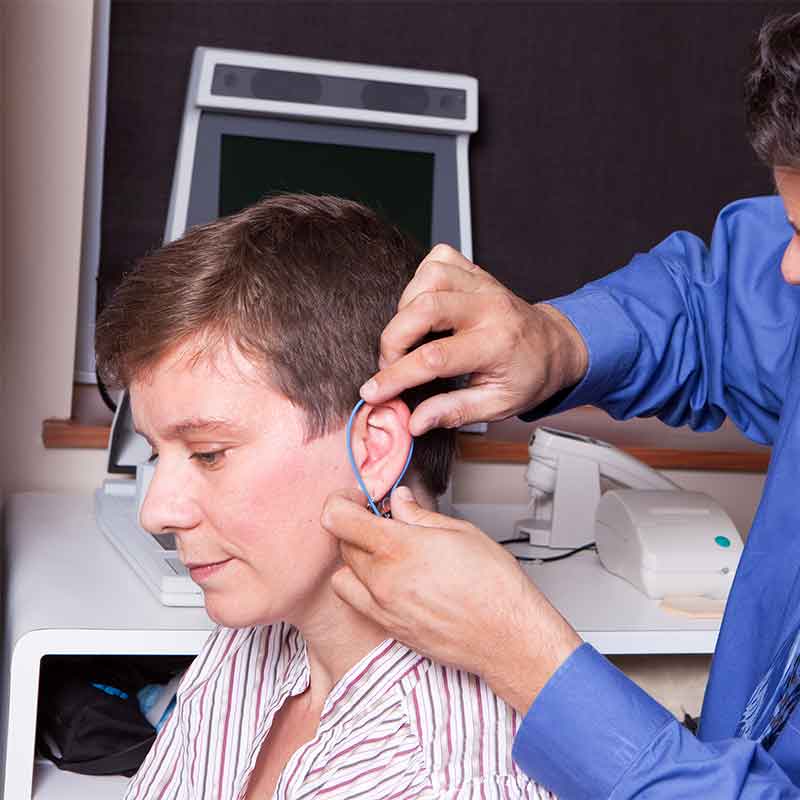
In-The-Ear (ITE) Hearing Aids in Mesa, AZ
What Are ITE Hearing Aids?
In-the-ear hearing aids are custom molded devices that sit inside the outer portion of the ear, also called the ear bowl. Unlike behind-the-ear devices, the entire system is contained within a single shell.
The device casing houses:
- Microphone
- Amplifier
- Receiver (speaker)
- Signal processor
- Battery system
This design allows ITE hearing aids to provide moderate to strong amplification, making them suitable for mild, moderate, and sometimes severe hearing loss.
Most patients simply think of them as: a hearing aid that sits inside the ear and is easier to handle than very small styles.
How ITE Hearing Aids Are Custom Made
Unlike over-the-counter devices, ITE hearing aids are built specifically for your ears. At Tri-City Audiology, the process typically looks like this:
- A hearing specialist performs a diagnostic hearing test
- A soft impression of the ear is taken
- The mold is scanned and digitally modeled
- A manufacturer fabricates the hearing aid shell and internal electronics
- The device is programmed and fitted to your hearing profile
Modern manufacturers use 3D scanning and CAD modeling to ensure the shell precisely matches the ear anatomy. That precision matters — it affects comfort, retention, and acoustic performance.
Patients usually just notice one thing: “It fits like it was made for my ear.” Because it was.
Common Features Found in Modern ITE Hearing Aids
Not all hearing aids are created equal. Some models are basic, others are loaded with technology that quietly works in the background to improve hearing clarity. Typical features may include:
- Bluetooth streaming from smartphones
- Adaptive noise reduction
- Directional microphones
- Rechargeable battery options
- Automatic environmental adjustments
- Feedback suppression technology
- Smartphone control apps
Some devices can actually analyze the listening environment thousands of times per second, adjusting amplification patterns automatically.
Why Many Patients in Mesa, AZ Choose ITE Hearing Aids
People often pick this style for practical reasons. Sometimes it’s about comfort, sometimes visibility, sometimes dexterity. Advantages patients mention most often:
- Larger controls compared to very small hearing aids
- Easier insertion and removal
- Custom molded for comfort
- No tubing or external components
- Strong amplification capability
There’s also a psychological factor. Many patients like that everything sits inside the ear, rather than having a device behind it.
Quick Reality Check: Pros and Cons
| Factor | ITE Hearing Aids |
|---|---|
| Visibility | Moderate |
| Power | Moderate to High |
| Ease of Handling | Easier than small canal styles |
| Battery Size | Larger than CIC models |
| Wind Noise | Slightly higher exposure |
A common question patients ask is whether they’re “too visible.” In practice, most people don’t notice hearing aids nearly as much as patients expect.
Who Usually Benefits from ITE Hearing Aids?
The “right” hearing aid depends on the individual. But ITE hearing aids are commonly recommended for people who:
- Have mild to severe hearing loss
- Prefer larger devices that are easier to handle
- Experience dexterity challenges
- Want a custom molded device
- Prefer hearing aids with manual controls
Older adults in Mesa, AZ sometimes find this style easier to manage than very small hearing aids that sit deep in the ear canal. That said, the best way to know is through a hearing evaluation and consultation with Tri-City Audiology.
Comparing Hearing Aid Styles
Patients often ask how ITE devices compare to other hearing aids. Here’s a simplified overview.
| Hearing Aid Style | Placement | Visibility | Power Level |
|---|---|---|---|
| ITE | Outer ear bowl | Moderate | Medium–High |
| CIC | Deep ear canal | Very low | Moderate |
| BTE | Behind ear | Visible | High |
ITE devices sit somewhere in the middle: not the smallest, not the largest — but often a practical balance between power and comfort.
A Few Questions Patients Ask All the Time
They can be. Full-shell ITE models are capable of providing significant amplification, though in some severe cases a behind-the-ear device may provide more power.
Most hearing aids last three to seven years, depending on usage, maintenance, and technology generation.
Because they are custom molded, most patients find ITE hearing aids comfortable after a short adjustment period.
Typically no. Children’s ears grow rapidly, which would require frequent replacement of the custom shell.
Yes. Like any hearing aid, they require routine cleaning and occasional servicing to remove wax buildup and maintain performance.
The First Step Toward Better Hearing in Mesa, AZ