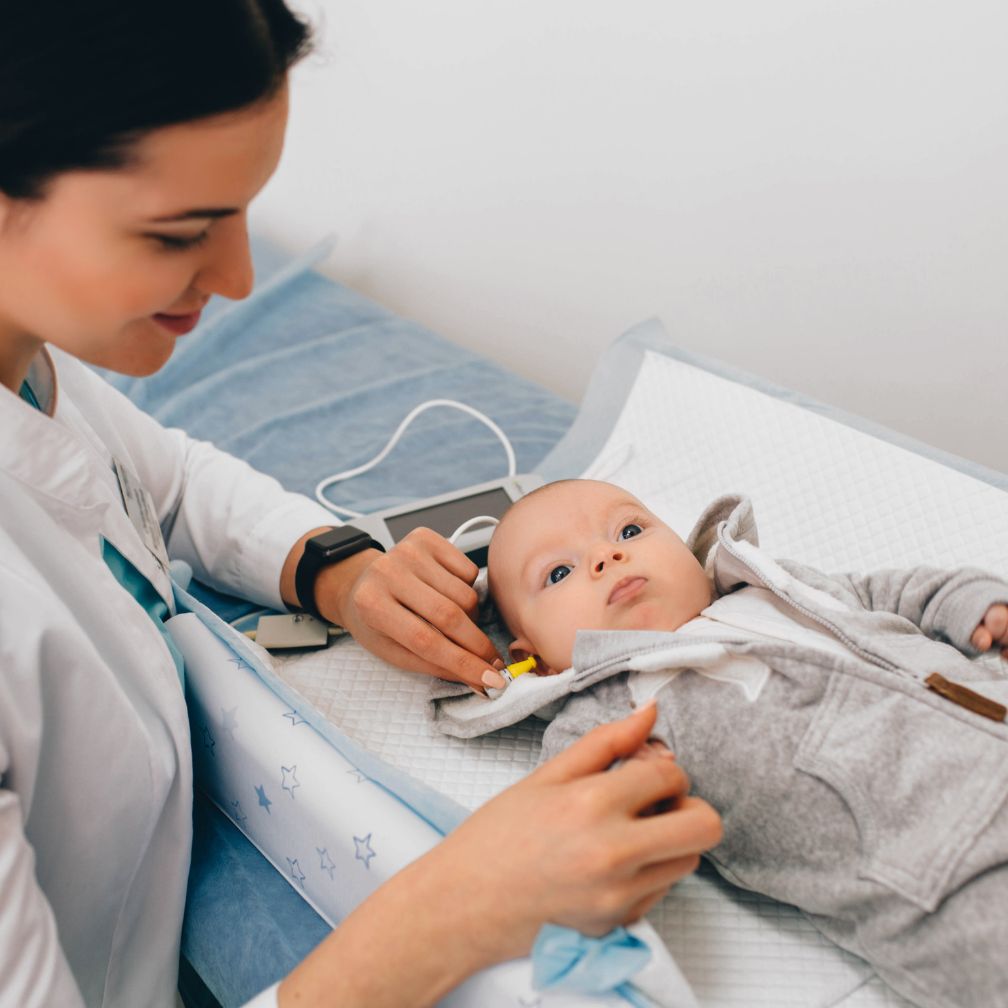
For newly minted parents, hearing that their newborn presents with hearing loss almost always feels terrifying and sad. Nevertheless, the reassuring fact stands: with swift screening and appropriate intervention, infants facing hearing loss are able to flourish. Without doubt, such infants can learn language, social capabilities, and meaningful relationships within their community, resulting in a fulfilling life!
Two of the primary supportive devices for assisting infants with hearing loss include custom hearing aids and cochlear implants. In the following segment, we detail their functional mechanisms and clarify how to select the best choice for your infant.
Demystifying Hearing Deficits in Newborns
Hearing impairment in newborn infants frequently arises from distinct underlying sources, including:
- Distinct genetic variations (even within family trees missing hearing loss history)
- Primary maternal congenital infections such as cytomegalovirus (CMV) or rubella infection
- Delivery difficulties, including acute oxygen deprivation or premature delivery
- Certain clinical medications utilized throughout neonatal intensive care stays
Which phase matters most? Swift medical diagnosis. This critical mandate clarifies why infants across the United States undergo auditory checks prior to leaving the birth facility. Specialized pediatric auditory doctors enforce the universal “1-3-6” diagnostic framework:
- Preliminary auditory screening completed before 30 days of age
- Definitive diagnostic verdict achieved within 3 months
- Dedicated treatment (utilizing medical units or targeted speech therapy) started within 6 months of life
Meeting these milestones offers infants their ideal path toward speech, language, and cognitive development. Whenever you want support surrounding these screening procedures, your primary pediatrician remains ready to assist you!
Pediatric Hearing Aids for Young Babies
For infants diagnosed with mild to severe auditory loss, modern hearing aids frequently serve as the primary clinical remedy. These compact, body-worn units boost incoming sound waves, helping babies hear speech and environmental sounds more clearly.
Wearable hearing devices for babies are:
- Fully cleared and safe for infants just several weeks of age
- Designed with soft, gentle, flexible ear molds that adapt as the baby matures
- Equipped with child-resistant battery compartments and child-focused protective mechanisms
- Expertly tuned by a certified pediatric audiologist to match your baby’s exact hearing needs
As your baby grows, their hearing aids require regular clinical updates to guarantee proper physical fit and maximum performance.
Cochlear Implants for Infants
If a baby exhibits profound sensorineural hearing loss while demonstrating limited success with standard amplification, a cochlear device can be prescribed. Diverging significantly from traditional hearing devices, cochlear implants:
- Require surgical implantation within the auditory bone structure delivering direct electrical signals to the brain
- Bypass damaged parts within the auditory system
- Change ambient sound waves into direct electrical impulses that directly excite the acoustic nerve
Advanced cochlear implants function as:
- Clinically cleared by the FDA for pediatric candidates as young as 9-12 months of age
- Most successful when combined with structured early intervention and strong parental involvement
- Sanctioned strictly following an exhaustive clinical assessment by a certified audiologist and otolaryngologist
This evaluative framework encompasses neuroimaging scans, advanced hearing evaluations, and in-depth discussions surrounding achievable long-term goals.
Contrasting Hearing Aids with Cochlear Implants
- Mild to severe auditory decline uses Hearing Aids; Severe to profound hearing loss: Cochlear Implants
- Non-Invasive wearable design: Hearing Aids; Surgical insertion required: Cochlear Implants
- Acoustic volume boosting: Hearing Aids; Digital electrical impulse transformation: Cochlear Implants
- Intervention starts in early infancy: Hearing Aids; Access starts at 9-12 months: Cochlear Implants
Final Takeaways: Navigating Infant Hearing Solutions
In the event your infant receives a hearing loss diagnosis, you possess multiple viable options and plenty of support. By partnering with skilled pediatric auditory specialists, numerous children grow to master communication skills that mirror those of their age group.
Whether your child is a candidate for hearing aids or cochlear implants, acting swiftly creates a profound lifelong advantage.
Do you need professional advice regarding your baby’s current hearing health? Reach out to our specialists today for a complete diagnostic review and tailor-made care roadmap.